
Examinations Under Oath (EUO) in Florida

After a motor vehicle accident involving injuries, an Examination Under Oath (EUO) provides an opportunity for a representative of an auto insurance carrier to question their insured under oath in the presence of a court reporter.

The EUO is a formal process used by insurance companies to gather more information about a claim, prevent fraud, or allow the insured party to prove their losses if there is missing or destroyed evidence.

Most insurance policies require an insured to submit to an Examination Under Oath as part of the insurer’s investigation prior to deciding coverage. The said policies allow carriers to examine their insureds and omnibus insureds, i.e., individuals not named but covered under the subject policy. Any failure by the insureds to cooperate with this policy condition or term may result in a denial of coverage.

An EUO is a process by which the insured is asked a number of questions by the insurer’s lawyer, under oath, about the subject claim. The Florida Rules of Civil Procedure do not apply to Examinations Under Oath. Since an EUO may be conducted by an attorney for the insurer and involves sworn testimony regarding the insured’s claim, it is recommended that all insureds have an attorney present. The insured’s attorney will be able to keep an eye on the propriety and scope of the insurer’s conduct and questions to protect the insured’s interest in the claim.

Since an EUO is a sworn statement which can be used by the insurer in evaluating the claim, and in a future court proceeding, it is vital that an insured answer all questions truthfully. An insured should refrain from speculation or exaggeration in any way. If one does not recall or know the answer to a question it is acceptable to simply say “I don’t recall” or “I don’t know.”

An insured should only speak if there is a question pending and only address that question. One should not volunteer additional information. Even though it may seem like one is being cooperative, this conduct often provides the insurer with more information on which to ask further questions and delve deeper into the subject claim. One must consider that the insurer’s goal is to not have to pay the claim. The more information one volunteers the greater basis for a potential defense against paying the claim.

An Examination Under Oath can last as little as one (1) hour and as long as eight (8) hours. The duration of the EUO is often unknown at the outset and depends on a number of factors. Some factors may include who the insurer has as their attorney, how complicated the claim may be, how many insurance benefits are being claimed, the age of the claim, as well as how many prior claims the insured may have, among others.

While most EUOs do not last the entire day, the insured should be prepared to be available for a full day as the insurer has the right to use the entire workday to conduct its EUO. Failure to attend an EUO for a reasonable period of time may provide the insurer with grounds to deny the claim. Consequently, an insured should plan to be available for a full day.

A policyholder or insured should prepare for an EUO. It is recommended that a policyholder or insured create a timeline for the claim. While an insured need not know the precise dates or amounts claimed for specific damages, an insured should be familiar with the events of the claim, the parties involved, what actions have been taken since the loss and essentially have a reasonable working knowledge of their claim.

The insurer will often require the insured to produce documents prior to an EUO. The insurer will often send a schedule or exhibit requesting specific documents or documents that relate to a specific area of inquiry on the subject claim. An insured should perform due diligence in trying to find and produce as many documents as possible that are responsive to the insurer’s requests.

Copies of all responsive documents should be sent to the insured’s attorney well in advance of the EUO so that the insured’s attorney has sufficient time to review the documents prior to producing any documents to the insurer.

An insured is not required to search for documents. An insured is only required to produce responsive documents that are in their immediate possession.

There are often issues as to which questions an insured must answer and which questions, or type of questions, an insured can refuse to answer. The general rule is that an insured must answer all questions relating to the subject claim and an insured should try to answer all reasonable inquiries posed by the insurer. One can ask the examiner to rephrase a poorly worded or unclear question or ask them to repeat the question if they missed it.

The pervasive thread running throughout Florida case law or court decisions is that the policyholder or insured may not refuse to answer questions on the actual loss itself or circumstances surrounding that loss. If the question is material to the investigation, i.e., pertaining directly to the loss or surrounding circumstances, then the policyholder or insured must answer the question or risk violating their insurance policy provisions.

If there are any additional QUESTIONS regarding the foregoing matters, contact or call the Attorneys at CASERTA & SPIRITI before an unfortunate and unexpected accident occurs!!
A QUICK OVERVIEW OF A FLORIDA ACCIDENT CASE

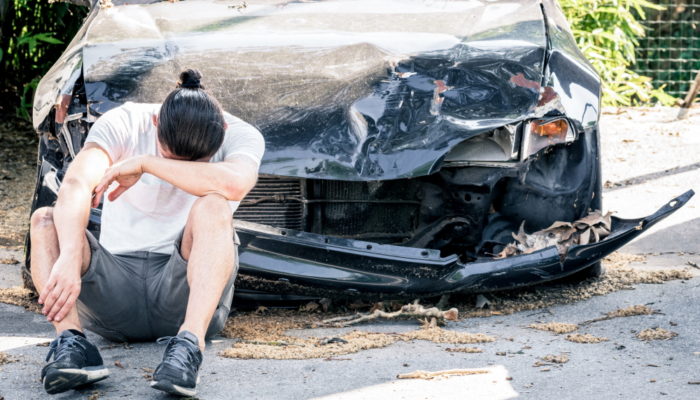
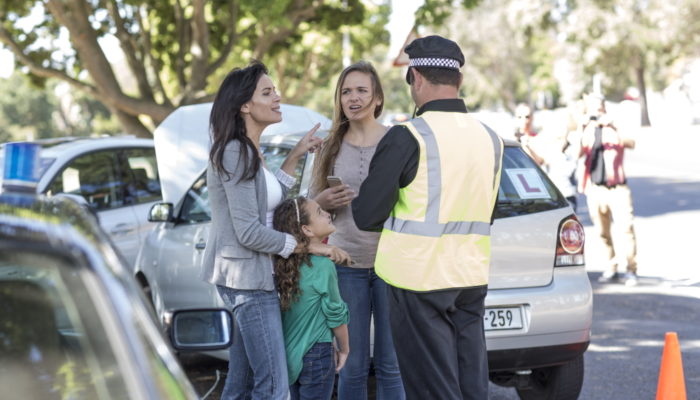
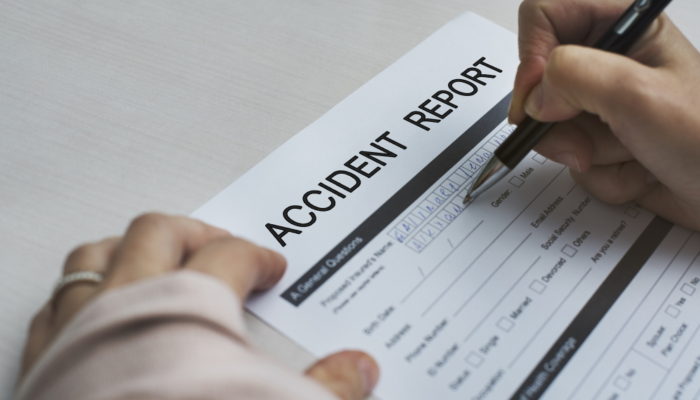
The following steps are important if you are involved in an accident which causes injury in the state of Florida.


An injured party should first seek medical treatment even prior to contacting a lawyer.

Even if a person does not believe, at first, that they are seriously injured, one should visit the ER Dept. of a hospital, Urgent Care, or a clinic to make sure they are well. Seeking medical attention has another advantage. When injuries are timely recorded, then said documentation can be used in and to substantiate a personal injury claim or lawsuit.

One should gather sufficient information to make a claim or sue the correct driver or negligent party or at fault party in a motor vehicle or other type of accident. Needed information includes but is not limited to name and contact information of the other responsible party (driver, owner, etc.) as well as the car’s make and model, license plate number, etc., check the intersection or nearby businesses with security cameras. One should find out if there are any Witnesses and get their names and contact data.

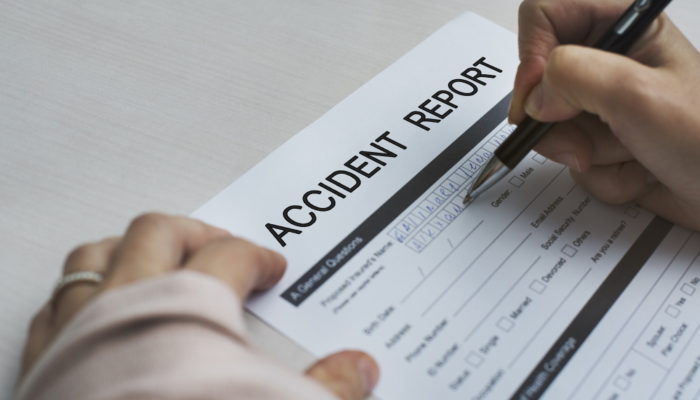
Thereafter, file a Police Report. Even if an involved party does not have all the necessary information, the police can often use their expertise to track down the driver, owner, etc.


Keep Records of any expenses resulting from the accident, such as property damages, rental bills, medical services rendered and reports of any injuries or a medical diagnosis, and insurance.


Finally, contact a trusted or recommended and experienced Florida Personal Injury Attorney. Get at least a consultation with a local Personal Injury Attorney regarding the details of one’s case. The Attorney and legal staff will evaluate the case and help determine whether there is negligence on the part of the other party involved; the extent, severity, and cost of injuries sustained based on medical reports or records; and consider legal options in seeking compensation for the injuries and damages incurred from the subject accident

.

A party to an accident should ask their lawyer any questions about their case both initially and throughout its progression.

If one has suffered injury or illness related to their personal injury claim, they should keep all medical appointments and follow-ups. If an injured party cancels or misses appointments, the responsible party’s adjuster or lawyer can use it against them, claiming the injuries are not as severe as claimed or one is not doing all they able to properly recover. One should tell their physician about any symptoms and follow all medical advice related to their personal injury claim.

As far as things not to do, they include but are not limited to limiting discussions regarding their case to their own Lawyer, who is their advocate and guide. Discussions with insurance adjusters, defense attorneys, and other outside parties may compromise the personal injury case.


Avoid posting online information regarding the subject case on social media, particularly when the case is still pending, since any information posted to social media such as Instagram, Facebook, Twitter, and elsewhere can be used out of context by the liable party’s defense counsel and insurance adjusters to minimize the legal claim or even damage the case.


Following an accident, one will customarily be questioned or interviewed by an insurance representative or investigator regarding the incident. In many cases, those interviews, statements, or conversations will be recorded, making it important that the injured party only provide the basics, i.e., name, address, date and time of accident and injury and share the rest of the details with their attorney.

If an individual is an accident victim who was injured in Florida, or has questions on their personal injury case, please contact one of the experienced attorneys at the law firm of CASERTA & SPIRITI.

PERSONAL INJURY SETTLEMENTS & SUBROGATION RIGHTS IN FLORIDA

In a settlement, the injured person agrees to a payment amount from the insurance company or other driver or at fault party, and in exchange gives up the right to pursue any further legal action in connection with the accident or incident.

The amount one recovers reflects the full settlement sum minus attorney fees, court costs, liens, and other expenses. Receiving the settlement check usually marks the end of the personal injury case.

In most cases, injured parties have incurred medical bills which may have been paid by insurance, Medicare, Medicaid, Worker’s Compensation or may remain unpaid. What concerns most clients is not the total recovery or settlement amount but the net proceeds they will receive after bills, liens, expenses, and fees are paid. Attorneys should negotiate with not only the at fault party or their liability insurance but also lienholders as well as medical providers (physicians, clinics, MRI facilities, hospitals, etc.) who provided care for the subject case.

Most medical treatment provided and paid by an insurance will have a right of subrogation or reimbursement when the case settles, except for Personal Injury Protection (PIP Insurance) in a motor vehicle accident. The foregoing includes traditional health insurance carriers, Worker’s Compensation and others like Medicare, Medicaid, or the VA. Temporary disability insurance as well as Med-Pay auto insurance coverage may also have a right of reimbursement.

The reasons a case progresses slowly can be based on several general points. Acase may be delayed by legal or factual issues. The case may involve significant damages and substantial compensation. The client/patient has not reached maximum medical improvement or has not completed treatment from the injuries sustained in the accident 

It can take anywhere from a few months to years for an accident case to settle. There may be much for each side to investigate, and if an innocent party suffered extensive injuries and property damage, this scenario could also explain why the settlement process is lengthy. Further, negotiating liens and medicals bills can sometimes take the same or longer time than the underlying case, particularly when the policy limits are low, and damages are large.

The reimbursement right of each entity can differ significantly considering how lien rights are calculated and/or protected by state or Federal law or statute and by the circumstances of each individual case. For example, Federal law provides protections to certain insurance companies governed by ERISA law, which provides them the right to insist on their full lien recovery from the settlement. Certain public hospitals have greater protections under state law as well.

A Settlement Closing Statement itemizing the Fees, expenses & liens should be given to the client prior to the signing of a Release of Claims so that they are fully informed as to what the final total amount recovered would be as well as their net recovery.This document is prepared by the client’s personal injury attorney and must be reviewed and approved by the client before any money can be disbursed. The closing statement will set forth the funds that will be going to the client’s personal injury attorney for his or her fees, the costs involved in the litigation or case, the money that is being paid to providers, and the amount of money that will be disbursed to the client. Often this document is signed as well as the release when the settlement funds are received or prior thereto.

Once the Release of Claims and Settlement Closing Statement are signed and the insurance draft or check is received and then deposited in the law firm’s Trust Account, the case against the responsible party is concluded, if pre-suit or a dismissal is filed with the Court in the lawsuit unless the case went to verdict and/or a judgment was obtained. Thereafter, once the settlement check clears the bank, all liens must be resolved and paid as well as the attorney’s fees and expenses, and then, the net proceeds are paid to the client. At that point, the subject case should be concluded.

If you have been injured in an accident or have any additional QUESTIONS regarding the foregoing matters, contact or call the Attorneys at CASERTA & SPIRITI.

LADY BIRD DEEDS IN FLORIDA (A QUICK REVIEW)

Lady Bird or Ladybird deeds are recognized in a number of statesincluding Florida. Each state has its own requirements for validity, so it is important to use a lady bird deed form specifically designed for use in the state where the property is located. The lady bird deed in Florida allows one to avoid probate court, reserve powers to the current owner, maintain Medicaid eligibility, and qualify for the Florida Homestead exemption.

A lady bird deed is a way to transfer property to someone else outside of probate while retaining a life estate in the property. This type of deed got its nickname when former President Lyndon Johnson used it to convey real property to his wife, Lady Bird Johnson.

Specifically, a lady bird deed is a transfer of property to another with a reservation of a life estate, which means a person can transfer property and retain ownership in the subject property until death, at which point it will then transfer to the other.  With the Florida lady bird deed, a current owner or owners canconvey tothemselves and/or retain a life estate interest (enhanced life estate) in their property. A life estate is a right to live in the property until death. When they die, the real property passes to their beneficiaries designated in the lady bird deed, called the remaindermen.

It is also known as an enhanced life estate deed, which allows the estate holder to convey or mortgage the property without the approval of the remainderman. This gives the property owner of the life estate flexibility during the owner’s lifetime.

The single biggest advantage to securing a Lady Bird Deed in Florida is that, after death, the owner’s estate can avoid probate, and for now, the remaindermen or beneficiaries get the property at a stepped-up basis regarding capital gains.  When figuring capital gains taxes, property transferred in a lady bird deed gets taxed on the value of the property on the date of the owner’s death, instead of the owner’s tax basis when purchased. This usually results in a much lower tax. During the current owner’s lifetime, it does not affect Medicaid eligibility, and the current owner remains eligible for the Homestead Exemption. While a lady bird deed may cost a little more than another type of deed due to its potential complexity, it is still less expensive to obtain than a trust or going through probate.  Also, to record a deed, documentary stamp taxes are ordinarily paid. With a Florida lady bird deed, there is no need to pay the taxes immediately. The reason for this is that there is no immediate transfer of ownership. The taxes may be due, however, when the person holding the estate passes away.

If you should have any additional questions or would like to discuss your situation, concerns and needs, please call an Attorney at CASERTA & SPIRITI.

GAP INSURANCE & A TOTAL LOSS VEHICLE FROM A FLORIDA AUTO ACCIDENT-WITHOUT IT, YOU COULD OWE MONEY

Many Florida residents are surprised to find they still owe money on their car loan after insurance pays for their total loss vehicle. How does that happen? The answer is the insured or claimant still owes more money than the motor vehicle or automobile was worth at the time of the accident. Insurance pays for a total loss vehicle (i.e., when value is less than the cost to repair) the Insurance company pays its fair market value, not the amount owed on the loan or what it will cost to get another similar or replacement vehicle.

As understood by most, a motor vehicle loses a significant amount of its value when merely driven off the sales lot. How can one be protected? GAP (Guaranteed Auto Protection) insurance is a type of insurance coverage which pays the difference in these situations between what one owes the bank or lender on their auto loan and what the car was worth at the time of the subject accident.

Generally, GAP is not prohibitively expensive and can be a major protection if involved in a motor vehicle accident and one has a financed car. When insurance pays the value of a depreciated vehicle, which was financed, GAP insurance pays that difference on the remaining balance of the loan. No Florida resident wants to pay for a vehicle they cannot use.

Specifically, Gap insurance in Florida works the same way as GAP insurance in the rest of the U.S. It pays the balance remaining on a car loan or lease contract after a liabilitycomprehensive, or collision policy coverage pays out the actual cash value of a totaled vehicle. The state of Florida does not require any driver/owner to carry GAP insurance. However, certain lenders in Florida may require customers to carry it if they get an auto loan or lease.

Various companies, including banks and dealerships, offer GAP insurance in Florida. While an individual should take their time deciding which one is right for them, one can also have confidence that it can provide a major protection under their particular circumstances at the time of an unfortunate accident.

It is worth noting that GAP coverage is usually cheaper to purchase from an insurance company than a dealership.

GAP insurance takes about 5-45 days to pay the policyholder after an accident insurance claim is filed. For drivers to receive a GAP insurance payout, the subject vehicle first needs to be declared a total loss, and the insurance company needs to accept the claim.

Again, if a person financed a vehicle, Florida GAP insurance covers the outstanding balance that remains in the event that their motor vehicle is totaled, and they owe more on the auto loan than the actual cash value of the vehicle. GAP insurance in Florida can be purchased from an insurance provider, the dealership, or even stand-alone companies. However, the cheapest Florida GAP insurance rates come from insurance providers at an average of $5.00 per month or $60.00 annually, subject to inflation.

Finally, one can drop GAP insurance from their Florida auto insurance policy after a sufficient payoff of the applicable loan, so the specific vehicle is worth more than the remaining loan balance, or at the very least, when the said loan is paid off.

If you should have additional questions, please contact your insurance agent, insurance carrier, dealer, lender or one of the attorneys at CASERTA & SPIRITI before an auto accident occurs.

TIMESHARES IN FLORIDA

Florida is the home to over 350 timeshare resorts, each offering an atmosphere of luxury and comfort for vacationing. Florida has over 8 thousand miles of coastline, making it the perfect destination for a beach getaway.

A timeshare is a vacation property arrangement that lets a person share the property cost with others to guarantee time at the property. However, what is not mentioned are the ever-increasing maintenance fees and other incidental costs each year that can make owning one intolerable.

Legally, a timeshare is a form of fractional ownership in a property, typically in a resort or vacation destination. For example, if a person purchased one week at a timeshare condominium each year, they own a 1/52 part of that unit. Timeshares may be evidenced by a deed (a purchase of an ownership interest in the property) or just a contract (a leasing of the right to use the property).

Usually if one purchases a deeded timeshare, there is no expiration date. This means one is paying the maintenance fee indefinitely, even if the property is not used annually.

There are two basic types of timeshares: (1) the owner of the unit owns a piece of the real estate and (2) the owner of the unit has a lease or right to use the unit for the specified time. If a person owns a unit of a condominium for a week, then they own real estate.

When a timeshare property is owned by deed (deeded ownership), it is considered real property. As such, many real estate laws (though not all) apply to timeshare owners in the same way they are to homeowners. For instance, owners of deeded timeshares must pay property taxes on their vacation real estate. A timeshare estate is a parcel of real property under the laws of the state of Florida.

RTU timeshares are non-deeded and gives an individual the right to use a unit for a set amount of time. This means that, unlike a deeded timeshare contract, one does not actually own the property. The number of years each timeshare contract lasts depends on the resort and brand.

Having a deeded ownership means the subject timeshare is one’s property and have continuing obligations. One can enjoy it with family or friends, rent it out to other vacationers, and/or pass it down to relatives when done using it or after death.

When the owner dies, the timeshare becomes part of their estate. The inheritors of the timeshare become the new owners, and they are compelled to take over the timeshare fees.

Timeshares can pass by Will, Trust or Deed including a Ladybird deed.

In brief, one can refuse to inherit a timeshare. While the laws for rejecting an inherited timeshare can vary from state to state, the actual process will be the same and is widely known as Renunciation of Property.

However, in the case of the owner’s death, a timeshare becomes part of the estate, and therefore, the obligations attached to it are passed onto the next-of-kin or the beneficiary of the estate. Further, depending on the fees and any existing payments, the timeshare can either be a welcomed gift or a financial nightmare.

On average, it costs between 5 to 6 thousand dollars and takes about 12 to 18 months to get out of a timeshare contract using a timeshare exit company or attorney. However, the cost and the timeframe can vary depending on a number of factors including, how many contracts are attached to a timeshare.

Again, there are two distinct types of timeshare contracts one can purchase: a deeded ownership and a Right to Use timeshare. With a deeded timeshare, you own an actual fraction of the property through a deed. Right to use (RTU) gives a person the right to vacation at the property.

Once the owner of a timeshare dies, the timeshare is now subject to probate. Having a Last Will & Testament does not avoid probate, but rather, it instructs legally how the assets (such as the timeshare) should be distributed.

What does Fee Simple mean? Fee Simple is just another way of saying that a timeshare property is “deeded.” A deed is a legal document which provides the title to a timeshare property and grants official ownership rights. Fee Simple is regarded as the preferred type of vacation ownership.

Timeshare agreements usually contain a “perpetuity clause,” saying that the timeshare isvalid for the lifespan of the original owner. When the owner dies, the timeshare becomes part of their estate. The inheritors of the timeshare become the new owners, and they are obligated to take over the timeshare fees.

With approximately 10 million timeshare owners in the U.S. and annual revenues topping 10 billion dollars, vacation ownership is clearly an enormous business. Florida is one of the leading states in terms of the number of timeshares and the fact that several of the largest timeshare companies have their headquarters in the state.

For many timeshare owners, however, ineffective estate planning – or no estate planning at all – leaves their heirs with an expensive and aggravating mess figuring out what to do with the decedent’s timeshare when they pass. This is because owners often think of their timeshare as personal property, like a car or boat, instead of what it really is – deeded real estate.

For most timeshare developers, part of the sales pitch is that the owner can pass their ownership onto their children when they die, which is true. However, because it is legally considered real estate or real property, the only way ownership can transfer from one person to another is via a deed or court order (i.e., probate).

Consequently, what happens when a timeshare owner dies without addressing their ownership in their estate planning? Like many timeshares, it ends up in probate. The probate process is not only expensive and time-consuming, but it also means creditors see it as an asset and can pursue it to settle any debts against the estate.

Furthermore, in Florida, any probate administration involving a Florida-based timeshare must take place in Florida, regardless of where the owner or the heirs live. That can add even more complexity, more aggravation, and more expense to the process. And while there are ways to legally refuse or disclaim an inherited timeshare, that procedure is also a complicated, paperwork laden process, which will require the assistance of an estate planning attorney.

Instead, a more effective course of action is to avoid probate entirely and include one’s timeshare interest in their estate planning, treating it like the deeded real estate that it is. This can be carried out in one of several ways:

  1. Distribution through a trust. With a living or inter vivos trust, one can transfer assets into the trust and continue to have access to them. The assets are then distributed directly to one’s beneficiaries after death, bypassing probate entirely. By placing one’s deeded timeshare into a trust, ownership will go to their heirs without having to hire an attorney and go through a probate court proceeding.
  • Adding heirs through a deed transfer. By having the names of one’s heirs added to the timeshare deed, they become co-owners by right of survivorship or as a type of designated beneficiary known as remaindermen. That means, when one dies, full ownership automatically transfers to the survivors. One may even want to transfer the deed entirely to their heirs prior to death. However, that will make them legally responsible for the maintenance payments and property taxes sooner than later.

Either of these options will effectively eliminate a great deal of frustration and legal expense for the heirs. Unfortunately, most timeshare owners are not aware of this issue and the property ends up going through probate. When that happens, the timeshare often does not seem worthy of the time and expense involved with the probate administration. Conversely, including it in one’s estate planning will allow the heirs to continue enjoying the travel benefits as part of deceased’s legacy.

If you have questions about how to keep a timeshare out of probate or would simply like to discuss related issues with a qualified estate planning and/or real estate attorney or how to protect your family and assets, contact the office of CASERTA & SPIRITI for a consultation.

PREMISES LIABILITY – NEGLIGENT SECURITY IN FLORIDA

Although slip, trip, and fall-down accidents are the most common types of premises liability cases, there are others, including shootings, stabbings, assaults, battery, and negligent security. 

Commercial premises liability occurs when property owners or occupiers are held accountable when someone is injured while on their property due to the negligence by the business or vendor owning, occupying, or controlling the subject property and can mean that a customer may be entitled to sue for compensation to cover injuries, pain and suffering, lost wages, and medical bills.

In Florida, victims in premises liability cases are classified in one of three (3) ways:

  • The highest duty of care is given to customers and invitees who are on the subject property with permission by the property owner, i.e., a person who is invited to land by the possessor of the land as a member of the public or one who enters the land of another for the purpose of business dealings with the possessor of the land and whose presence is mutually beneficial. 
  • A lower duty of care is provided for those who are on another’s property for their own purposes known as a licensee and are there for their own convenience or to advance their own interests. 
  • The third classification includes trespassers who receive little duty of care, i.e., a visitor who has entered or remained on the property without the property owner’s permission.

If one is injured from a shooting, assault, stabbing, or otherwise harmed while on someone else’s property, the key question is whether the property owner owes that person duty of care and what level. The property owner usually owes a person a duty of care if they were a customer, invited guest, or tenant. One is also owed a similar duty of care by the owner if said individual was making a delivery or a similar errand. 

Once duty of care to the victim by the property owner is established, negligence on behalf of the property owner must then be proved. It is proving the property owner was negligent or reckless and thereby caused a breach of their duty of care. 

In Florida, property owners are not necessarily responsible for every crime which occurs on their property. In fact, they are not responsible for protecting guests, visitors, or tenants from actions by third parties, unless the crime is foreseeable and could have been prevented with appropriate security measures. In other words, the property owner could be liable if the crime – shooting, stabbing, assault, and/or battery, among others – could have been anticipated or foreseen and they failed to take proper reasonable security measures or precautions. Even so, in many such incidents, responsibility may be difficult to prove in a court of law, particularly, if the subject incident is the first occurrence on the property.

Property owners can be held liable if they fail to provide adequate security measures to prevent this type of violence, as well as their response in reducing the number of victims in the event of an incident of violence. Other factors can also come into play in determining whether acts of violence could have been foreseen including area crime rates, such as, but not limited to:

  • The history of crime on the property;
  • The history of violence at similar properties;
  • A known shooter at the property;
  • Suspicions of security personnel; and
  • Existing security measures (security guards, metal detectors, properly marked exits). 

When it is evident that the property owner owed the victim a duty of care and was negligent, the next step is proving a cause-and-effect relationship between the property owner’s negligence and the act of violence which occurred on the subject property. 

Shootings, stabbings, assaults, and battery can and do occur everywhere from school campuses to shopping malls, and everywhere in between. The perpetrator is always responsible for the attack, but property owners may also be liable if they failed to provide the necessary security measures for patrons, guests, and tenants. Consequently, lawsuits against property owners, event organizers, or security companies may be filed based on Florida’s laws regarding duty of care.

If an individual or their family member becomes a victim of a shootingstabbing, or assault and/or battery, they may have a claim against the owner of the property if the same was negligent in protecting guests, customers, or tenants. Property owners must maintain their property free from hazards and conditions which might result in or encourage violent crimes, but even so, their duty of care is limited to reasonable protection for foreseeable risks. 

In many cases, these lawsuits go forward successfully due to negligent security, since property owners owe a duty of care to residents, customers, guests, and visitors. This duty is to ensure the property is safe and secure. The following are several lack or failure of security measures that can be the basis of a claim for negligent security in a premises liability case:  

  • Inadequate security lighting;
  • Overgrown landscaping;
  • Faulty locks;
  • Lack of security cameras;
  • Lack of security personnel or proper fencing; and/or
  • No monitoring of secluded areas.

If you are injured while on someone else’s land or premises, promptly call the attorneys at CASERTA & SPIRITI for a free consultation regarding your potential case.

DUI IN FLORIDA

Under Florida law, Driving Under the Influence (DUI) of alcoholic beverages, chemical substances, or controlled substances is one offense, proved by impairment of normal faculties or an unlawful blood alcohol or breath alcohol level of .08 or above.

If this is a first conviction, the fine will be between $500–$2,000. If a blood alcohol level is .15 or higher, or there is a minor in the vehicle, the fine will be between $2,000–$4,000.

When arrested for DUI, one will likely be jailed until their BAC has been reduced to none. If prison or jail time is determined by the Court, the time can vary depending on the severity of the case. According to the State of Florida, a first conviction will not result in more than 6 months imprisonment.

First and second DUI offenses are typically charged as a misdemeanor DUI in Florida. While a third or subsequent DUI charge within 10 years or a DUI that involves injury or death to another person will be charged as a felony in Florida.

In Florida, if a person is arrested for driving under the influence, their license will be suspended immediately if either of the following occurs: Blood alcohol content (BAC) is determined to be. .08 percent or higher by a breath, blood, or urine test.

The possible consequences of a first-offense DUI in Florida include fines, license suspension, vehicle impoundment, having to install an ignition interlock device (IID), and jail time. Enhanced penalties might apply where the convicted motorist had a specified higher blood alcohol concentration (BAC).

Florida Statute Section 316.193 states that if the defendant blows over a .08%, police must hold them for 8 hours, or until the breath alcohol level is below .02%. Multiple police officers interpret this to mean that if the offender is arrested for a DUI, they must hold the offender for the full eight hours.

Florida law is unique in how it addresses DUI and driving privileges. If one has been arrested for a DUI in Florida, they have only 10 days from the date of the arrest to save their driver’s license. The driver’s license is immediately suspended upon the arrest for DUI.

Under Florida’s implied consent law, if a person refuses to take a breathalyzer test, he or she is subject to a mandatory license suspension. A first offense refusal will be a 1-year license suspension and a second or third offense will result in 18 months of license suspension with potential jail time.

In Florida, the charge of DUI has a few basic elements that the state must prove for a finding of guilt. First, that the subject person consumed alcohol or controlled substances. Second, that the said person was operating a motor vehicle on the roads of the State of Florida. Third, that the subject individual’s normal faculties are impaired.

If a person has 1 drink, they have satisfied the first element of proof required for the state to convict. Even a minimal 1 drink qualifies for “having consumed alcohol” or controlled substances. If a person is driving on the roadway, they have also met the second element of DUI, i.e., operating a motor vehicle on the roads of the State of Florida.

The third element is noteworthy since the question of “normal faculties impaired” can be one of the police officer’s opinion and does not require the evidence of a breath test. Remarkably, the law does not require a breath test for prosecution of DUI. The third element can be proven by the officer’s testimony that “in his opinion” the subject driver was impaired. This aspect is normally proven by physical observations such as slurred speech, red or bloodshot eyes, the smell of alcohol on the breath, poor balance, difficulty producing a driver’s license and car registration, leaning on the motor vehicle, and what most people are familiar with the so-called road-side field sobriety test. Consequently, even when there is no breath test, or there is a refusal of a breath test, the police can still provide their opinion that the subject driver was impaired based upon their observations.

If there are any additional QUESTIONS regarding the foregoing matters, contact or call the Attorneys at CASERTA & SPIRITI.

HOW TO CREATE A WILL IN FLORIDA

A Last Will & Testament is a document the allows an orderly disposition or distribution of assets after one’s death. To create an effective Will in Florida, the Testator or creator of the Will needs to comply with certain requirements.

Many states, if not all, require a person to be at least 18 years old and of sound mind to create a valid Will. The Testator must be aware of what they are doing and what document they are signing, and they must be mentally competent and cannot be adjudicated incompetent in a prior legal proceeding (i.e., a Court). Also, an emancipated minor can create a Last Will & Testament in Florida.

According to Florida Statute Section 732.502, every valid Will must be in writing (typed or handwritten) and signed by the testator in front of at least two attesting witnesses. Oral, videotaped or audio taped, and holographic (written entirely in the testator’s handwriting but not witnessed) Wills are not legally valid in the state of Florida. The Testator’s signature must be at the end of the document, and two attesting witnesses must also sign it in the presence of the testator as well as each other. Witnesses must be competent and at least 14 years old but preferably an adult. In Florida, notarizing a Will is not necessary to make it valid. However, a notary is required to make a Will self-proving, which means it can be admitted to probate without needing said witnesses’ testimony, which can speed up the process.

A Testator can include almost any type of asset in their Will, including any asset in which they hold an individual, separate, or divisible interest. Assets can include real or personal property, bank accounts, investments, and cash. A Testator can then designate how and to whom they want their property distributed. For example, they can identify a single Beneficiary (those who will inherit under the Will) to receive a specific asset or assign a percentage of their assets to each Beneficiary.

Florida law explicitly provides that a married Testator can disinherit the surviving spouse as a Beneficiary to their estate by including a provision in the will explaining their intent to do so. However, any marital property owned by both spouses, such as the marital home, cannot be the subject of such disinheritance, unless the surviving spouse elects to waive their right to inherit such property usually by way of a prior prenuptial or postnuptial agreement. In addition, without the martial agreement, a surviving spouse has spousal rights to a deceased spouse’s property whether or not the decedent provided for such in their will. These rights include exempt property, a family allowance, an intestate share, a pretermitted spousal share, an elective share, and homestead property rights. Said spouse is entitled to either the property left them in the subject Will or their “elective share,” based on Florida Statute Section 732.201. The elective share is 30 % of the decedent’s estate, including probate assets and most non-probate assets. A spouse can seek whichever is greater, meaning they can seek the election so that a Court performs the calculation. If the elective share is more than what was left to them in the Will, then the surviving spouse receives the elective share. If a person leaves their spouse more than the elective share, they may still receive the property designated in the Will. If a Testator tries to disinherit their spouse or leave them as little as possible, then the surviving spouse may request to receive their elective share of the subject estate.

Florida law recognizes valid Wills executed in other states or from a different country, so long as the subject Will is valid in that jurisdiction.

Creating a Will is a straightforward way to plan for what will happen to an individual’s estate after death. However, it is crucial that a person follow the exact requirements under Florida law to ensure that this document is legally valid and that one’s assets transfer according to their wishes. In Florida, a person can type or handwrite their Will, but it must be signed at the end in the presence of two witnesses. Said witnesses must be competent and over 14 years old, and they must also sign the Will in the Testator’s presence and in the presence of each other. If a Court considers the document invalid for any reason, it will distribute a person’s property according to Florida’s intestacy laws (i.e., next of kin as described by the applicable statutes).

If you have any further questions or need assistance in Florida when creating, redoing, revising, orupdating your Last Will & Testament, please contact one of the attorneys of CASERTA & SPIRITI at your earliest convenience.

RECKLESS, CARELESS DRIVING & ROAD RAGE-WHAT ARE THEY IN FLORIDA

In Florida, what are Careless Driving, Reckless Driving and Road Rage and what are the differences between the three?

Careless driving describes behaviors behind the wheel that can jeopardize the safety of others on the road, including other drivers, bicyclists, motorcyclists, and pedestrians. However, there is no intent behind the behavior to harm others.

While the exact definition of careless driving varies by state, in Florida it means the following (taken from Florida Statute §316.1925):  “Any person operating a vehicle upon the streets or highways within the state shall drive the same in a careful and prudent manner, having regard for the width, grade, curves, corners, traffic, and all other attendant circumstances, so as not to endanger the life, limb, or property of any person. Failure to drive in such manner shall constitute careless driving and a violation of this section.”

Careless driving is a traffic violation that comes with hefty fines and points added to one’s license. So, how can someone prevent careless driving? It is simple; driving should be one’s only task when behind the wheel. Putting all other distractions behind them and staying alert in the driver’s seat can help to reduce the incidence of careless driving. Also, remember to follow the rules of the road, like stopping at red lights and stop signs and obeying the speed limit.

Careless driving may include things like:

  • Falling asleep at the wheel.
  • Using a cell phone or texting while driving.
  • Disobeying traffic signs.
  • Speeding.
  • Not using turn signals.
  • Illegal lane changes.

Reckless driving is a more severe violation than careless driving that involves intentionally driving in a way that may put other drivers in danger. Law enforcement officers may deem reckless drivers to have a “willful or wanton disregard” for human life and the safety of others on the road.

In many instances, distracted driving or driving while drowsy may be considered types of reckless driving, and the basis for this: distracted driving in recent years claimed over three thousand lives, while driving while drowsy caused over six hundred deaths for the same period.

Examples of reckless driving include:

  • Driving under the influence.
  • Speeding or driving too fast for conditions.
  • Drag racing.
  • Going around stopped school buses.
  • Driving the wrong way.
  • Texting while driving.
  • Failing to yield the right of way.
  • Weaving in and out of lanes.
  • Driving on the sidewalk.
  • Running red lights or stop signs.
  • Crossing a double yellow line on a highway.

In Florida, authorities describe road rage as “a motorist’s uncontrolled anger that is usually provoked by another motorist’s irritating act and is expressed in aggressive or violent behavior.” On the other hand, the National Highway Traffic Safety Administration (NHTSA) defines aggressive driving as “any combination of traffic offenses or general behaviors that endanger persons or property.”

Road rage is an extremely dangerous form of aggressive driving. In the worst cases of road rage, drivers may follow other cars home to physically confront someone, stalk other drivers, or intentionally collide with other vehicles. The NHTSA considers aggressive driving a traffic offense and road rage as a criminal charge.

Every driver occasionally becomes frustrated due to poor judgment of other drivers or traffic conditions. Road rage is when that anger persists and increases, potentially leading to catastrophic consequences. While young men appear to be most susceptible to road rage, it can affect people of any age or gender because anyone can take offense at what they think another driver is doing.

A few examples of aggressive driving and road rage include:

  • Yelling at other drivers.
  • Racing another vehicle.
  • Suddenly speeding up or braking.
  • Following too closely or tailgating.
  • Flashing lights.
  • Cutting off other vehicles.
  • Driving in forbidden areas, such as medians, sidewalks, or shoulders.
  • Passing where prohibited.
  • Weaving in and out of lanes.
  • Disobeying traffic signs or signals.
  • Angry, unnecessary honking.
  • Making an improper turn.
  • Excessive speeding.
  • Making threatening or rude gestures at other drivers.
  • Displaying a gun or another weapon.
  • Intentionally causing a crash.

While road rage is one type of reckless driving, reckless driving does not always include road rage. For instance, distracted driving, driving under the influence, and excessive speeding are types of reckless driving that may not involve road rage.

While an individual cannot avoid all encounters with people driving recklessly, there are some things one can do to limit their opportunities of getting into an accident with them:

  • Stay alert and be a defensive driver. Stay away from aggressive drivers when possible.
  • Do not engage with the driver. Give them sufficient room and avoid making eye contact if they are acting angry near you. Think about calling the police if it is suspected an aggressive driver is following.
  • Allow them to pass.
  • Put oneself in their shoes and try to understand why they are driving poorly. Do not take their behavior personally.
  • Do not offend aggressive drivers by tailgating, driving slowly in the left lane, cutting them off, or obscene gesturing.
  • Remain calm.

If a driver, pedestrian, motor cyclist or bicyclist has been in a motor vehicle accident caused by a reckless or careless driver in Florida, contact your auto insurance, if applicable, as well as one of the Attorneys at CASERTA & SPIRITI for a free consultation. An experienced Personal Injury attorney may be able to get the compensation deserved for the injuries and other damages sustained in such accident.